Last reviewed: November 2026. This guide is general information. Check any product against your own school’s needs, policies and safety guidance.
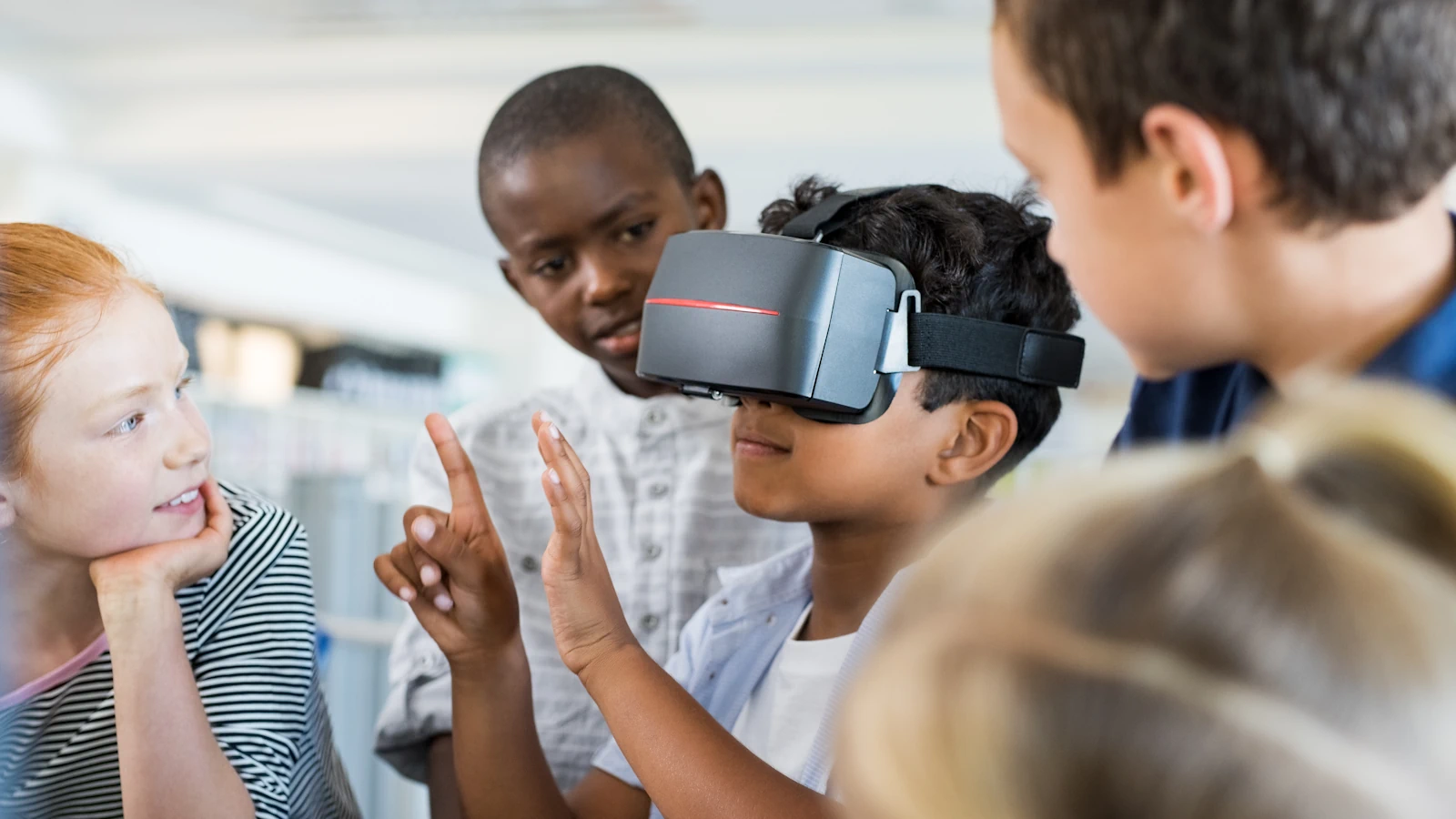
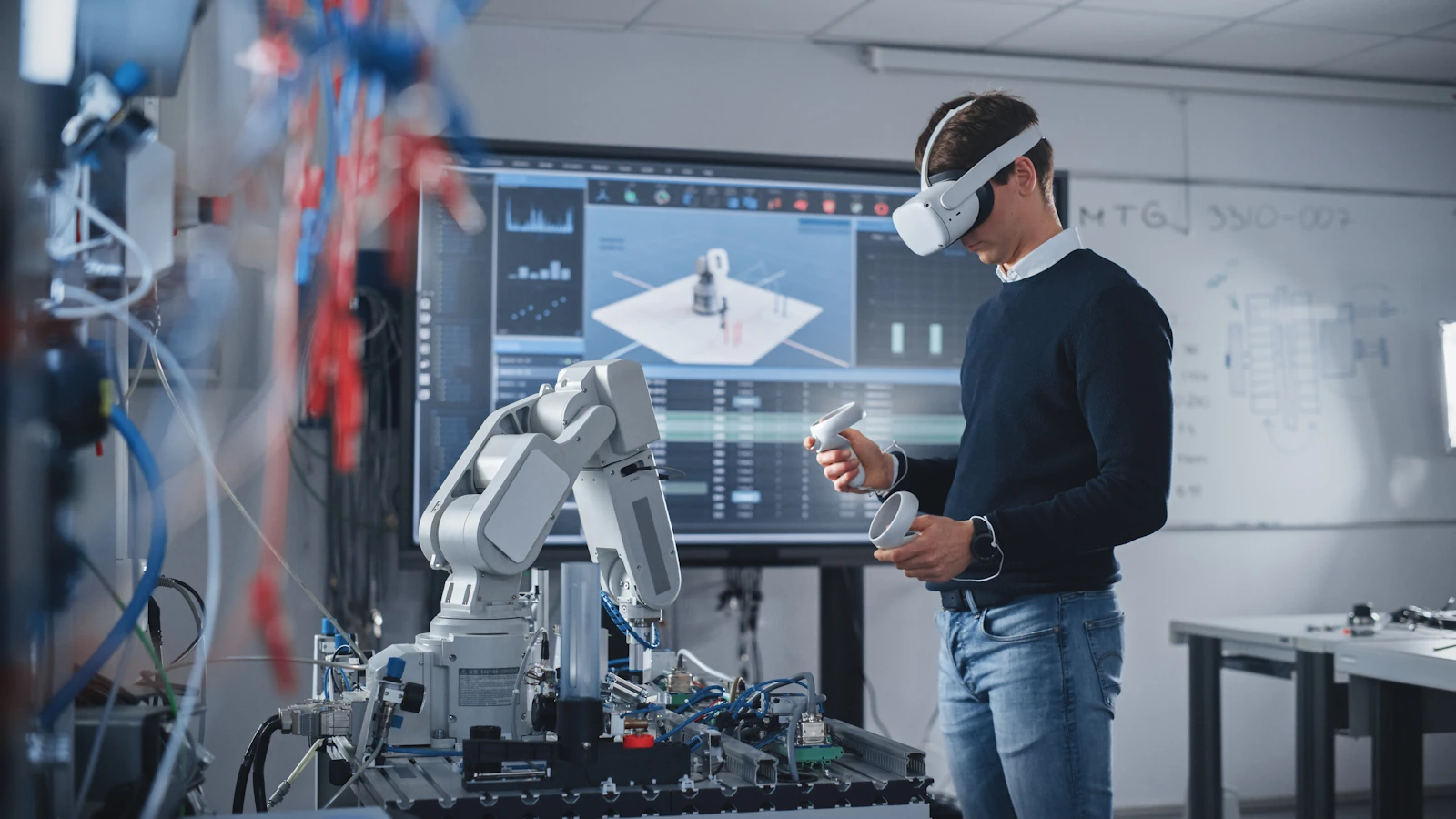
Virtual reality (VR) lets a student stand in a welding bay, a lab or a hospital ward without leaving school. Schools and career and technical education programs use it to widen the range of jobs students can picture. The research is early but points in a consistent direction.
Key takeaways
- Confidence: in one study, people who explored a welding career in a virtual environment reported more positive career self-efficacy than those using traditional career exploration.
- Interest: in a study of high school students, a VR science simulation raised interest more than a video did.
- Not equal for everyone: one study found that performance in the simulation predicted career self-efficacy and interest for men but not for women.
- Read vendor data with care: much of the available data comes from small surveys run by the companies selling the products.
In this guide
What the research shows
- Career confidence. A 2022 paper in PLOS One reported two studies of career-oriented virtual environments. The first compared welding career exploration in a virtual environment with traditional career exploration and found that those using the virtual environment reported more positive career self-efficacy.
- Interest in science careers. Researchers at the University of Copenhagen tested VR lab simulations with Danish middle and high school students. As they describe in a British Educational Research Association post, high school students who used the VR simulation showed a significant increase in interest, greater than in the group that watched a video.
- 360-degree job videos. A 2020 pilot study had 41 students, about 15 years old on average, watch occupational 360-degree videos in class. They rated the experience positively and judged it useful for career orientation.
Limits of the evidence
- Effects may differ by group. The second PLOS One study found that individual performance in the simulation predicted career self-efficacy and interest for men but not for women, and only in the more immersive, higher-fidelity environment. A tool meant to widen horizons should be checked for whether it does so for all students.
- Vendor surveys are not trials. One provider, Transfr, reports a 2023 survey in which 68 percent of 31 high school students said they were highly engaged. That is a small, company-run survey of engagement, with no comparison group.
- Interest is not a career. These studies measure interest and confidence soon after the experience. None of them shows what students went on to study or do.
For the broader evidence on learning in VR, see virtual reality in education.
Questions to ask
- Which careers does the product cover, and do they match jobs available in our region?
- Is there independent evidence for it, or only the provider’s own surveys?
- What follows the VR session: a counselor conversation, a site visit, a course?
Common questions
Does VR career exploration work?
Early studies suggest it can raise interest and career confidence. In one, people who explored a welding career in a virtual environment reported more positive career self-efficacy than those using traditional career exploration. Long-term effects on career choices have not been shown.
Is VR better than video for showing students a job?
In one study of high school students, a VR science simulation increased interest significantly more than a video did. That is one study, in one subject.
Sources
- Social learning dynamics influence performance and career self-efficacy in career-oriented educational virtual environments. PLOS One, 2022.
- Makransky G. Can an immersive virtual reality simulation increase students’ interest and career aspirations in science? British Educational Research Association blog.
- Spangenberger P, Freytag S-C. Career Choice of Adolescents: Can occupational VR 360-degree Videos Facilitate Job Interest? 2020.
- Transfr. Arkansas Northeastern College VR Study Shows High User Engagement.