Last reviewed: November 2026. This guide is general information. Check any product against your own institution’s needs, policies and safety guidance.
Mixed reality (MR), extended reality (XR) and the metaverse are terms schools and universities meet in product pitches more often than in research. This guide explains what each means and what the reviews of studies have found so far.
Key takeaways
- Terms: XR is the umbrella for augmented, mixed and virtual reality. Mixed reality anchors digital objects in the real room so that users can interact with them.
- Universities: a review of immersive VR in higher education found that evaluations focused mainly on usability, not on learning outcomes.
- Mixed reality: reviews describe potential, and also a lack of research.
- Hardware: Microsoft’s HoloLens 2, the device behind much mixed reality research, has been discontinued.
In this guide
What the terms mean
- Augmented reality (AR) adds digital content to a view of the real world.
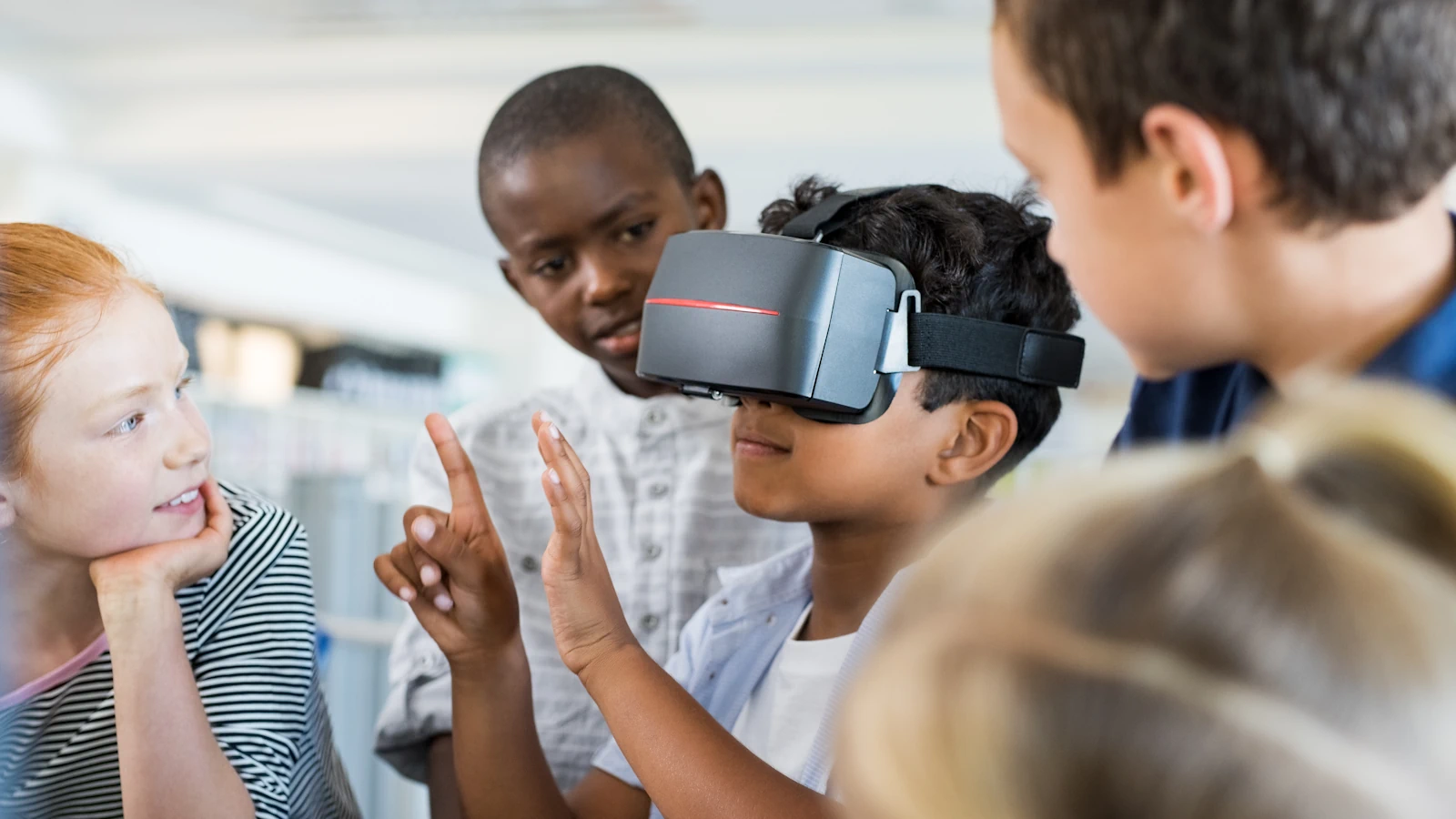
- Virtual reality (VR) replaces the real world with a computer-generated scene.
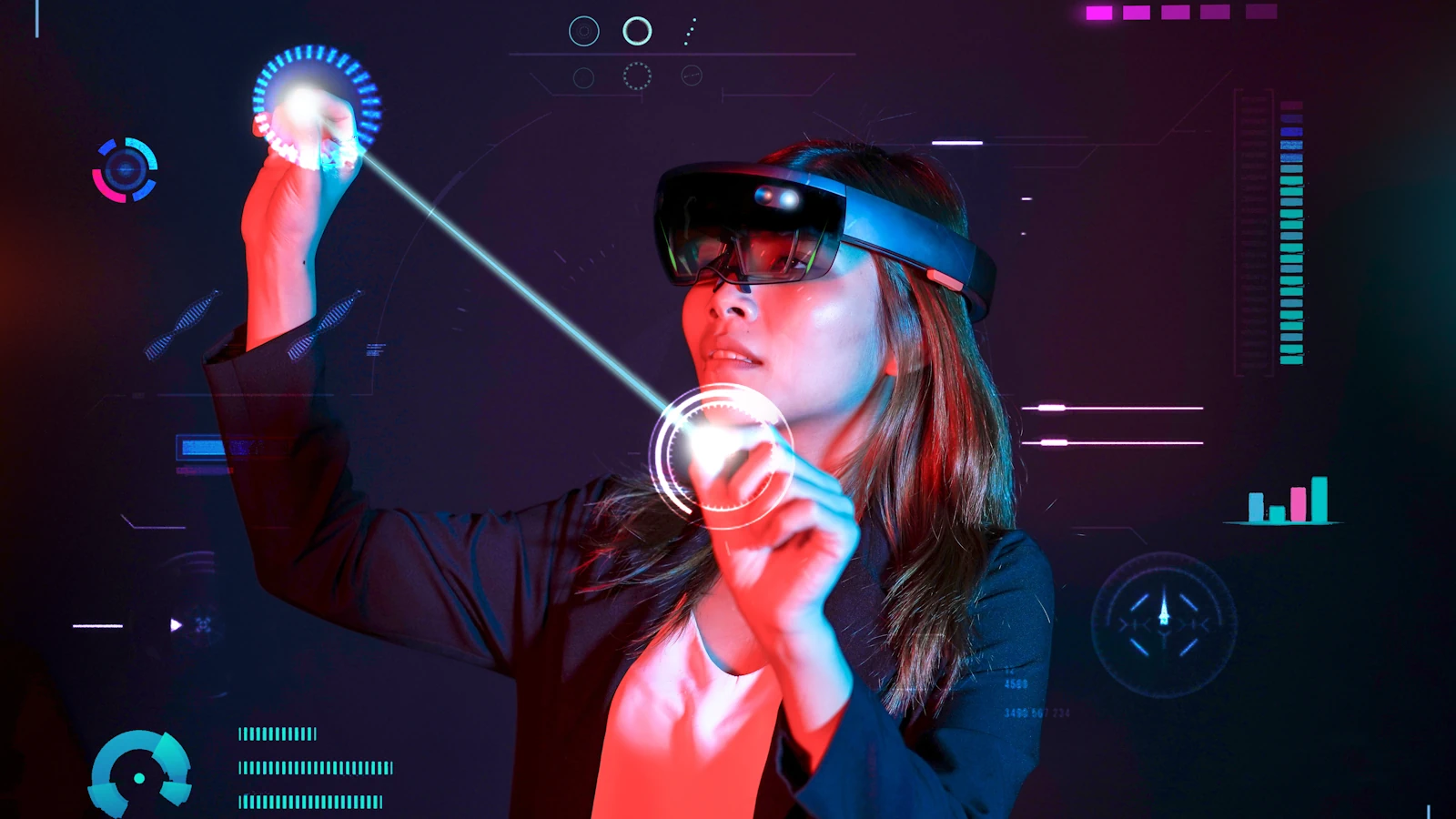
- Mixed reality (MR) places digital objects in the real room and lets the user interact with them as if they were there, usually through a see-through or camera-based headset.
- Extended reality (XR) is an umbrella term for all three.
- Metaverse is a looser label for shared virtual spaces that many people use at once. It describes a way of using VR, not a separate technology.
What the research shows
- VR in higher education. A 2020 systematic review in Computers & Education mapped how universities had applied immersive VR. It found that evaluation had primarily focused on the usability of VR apps instead of learning outcomes, and that immersive VR had mostly been part of experimental and development work.
- Mixed reality in higher education. A systematic review of experimental studies from 2017 to 2021 concluded that mixed reality has the potential to enhance learning experiences, while noting challenges still to overcome.
- HoloLens in teaching. A review of teachers’ and learners’ experiences with Microsoft HoloLens highlighted the lack of research on the use of mixed reality in education.
The stronger evidence sits with plain AR and VR. See augmented reality in education and virtual reality in education.
Limits to plan around
- Hardware has moved on. Microsoft has discontinued HoloLens 2, with support ending on December 31, 2027. Studies built on it describe a device institutions can no longer buy new.
- Usability is not learning. A study showing that students could use and liked a tool does not show that they learned more.
- Labels change. Products are renamed as terms go in and out of fashion. Ask what the product does, not what it is called.
For current devices, see VR and AR headsets for schools.
Questions to ask
- Has this product been tested for learning outcomes, or only for usability and satisfaction?
- Is the hardware it needs still made and supported?
- Would ordinary AR on a tablet or a desktop simulation meet the same goal?
Common questions
What is the difference between mixed reality and augmented reality?
Augmented reality adds digital content to a view of the real world. Mixed reality goes further by anchoring digital objects in the real room so that the user can interact with them as if they were there.
What does XR mean in education?
XR, or extended reality, is an umbrella term covering augmented, mixed and virtual reality.
Is there good evidence for mixed reality in teaching?
Not yet. Reviews describe potential but also a lack of research, and a review of VR in higher education found that evaluations focused mainly on usability instead of learning outcomes.
Sources
- Radianti J, Majchrzak TA, Fromm J, Wohlgenannt I. A systematic review of immersive virtual reality applications for higher education: Design elements, lessons learned, and research agenda. Computers & Education, 2020.
- Banjar A, Xu X, Iqbal MZ, Campbell A. A systematic review of the experimental studies on the effectiveness of mixed reality in higher education between 2017 and 2021.
- Semi-systematic literature review of teachers’ and learners’ experiences using Microsoft HoloLens. Springer, 2022.
- Road to VR. Microsoft Discontinues HoloLens 2, Support to End in 2027 with No Successor in Sight, October 2024.