Last reviewed: November 2026. This guide is general information and is not clinical or therapeutic advice. Decisions for an individual student belong with their family, teachers and specialists.
Virtual reality (VR) is often promoted as a safe place for students with disabilities to practice skills, and for autistic students to rehearse social situations. Early trials are encouraging, but they are few and small, and researchers say so plainly.
Key takeaways
- In schools so far: a review of 25 studies with students with disabilities found most used screen-based simulations, not headsets.
- Autism and social skills: a meta-analysis of randomized trials favored immersive VR, but it pooled only four studies and the range of possible effects was very wide.
- Still uncertain: a 2026 analysis of 11 trials found the evidence too sparse and inconsistent to say which kind of VR works best.
- Acceptance: studies with autistic participants have examined willingness to wear headsets, and with children, which devices they prefer.
In this guide
Students with disabilities
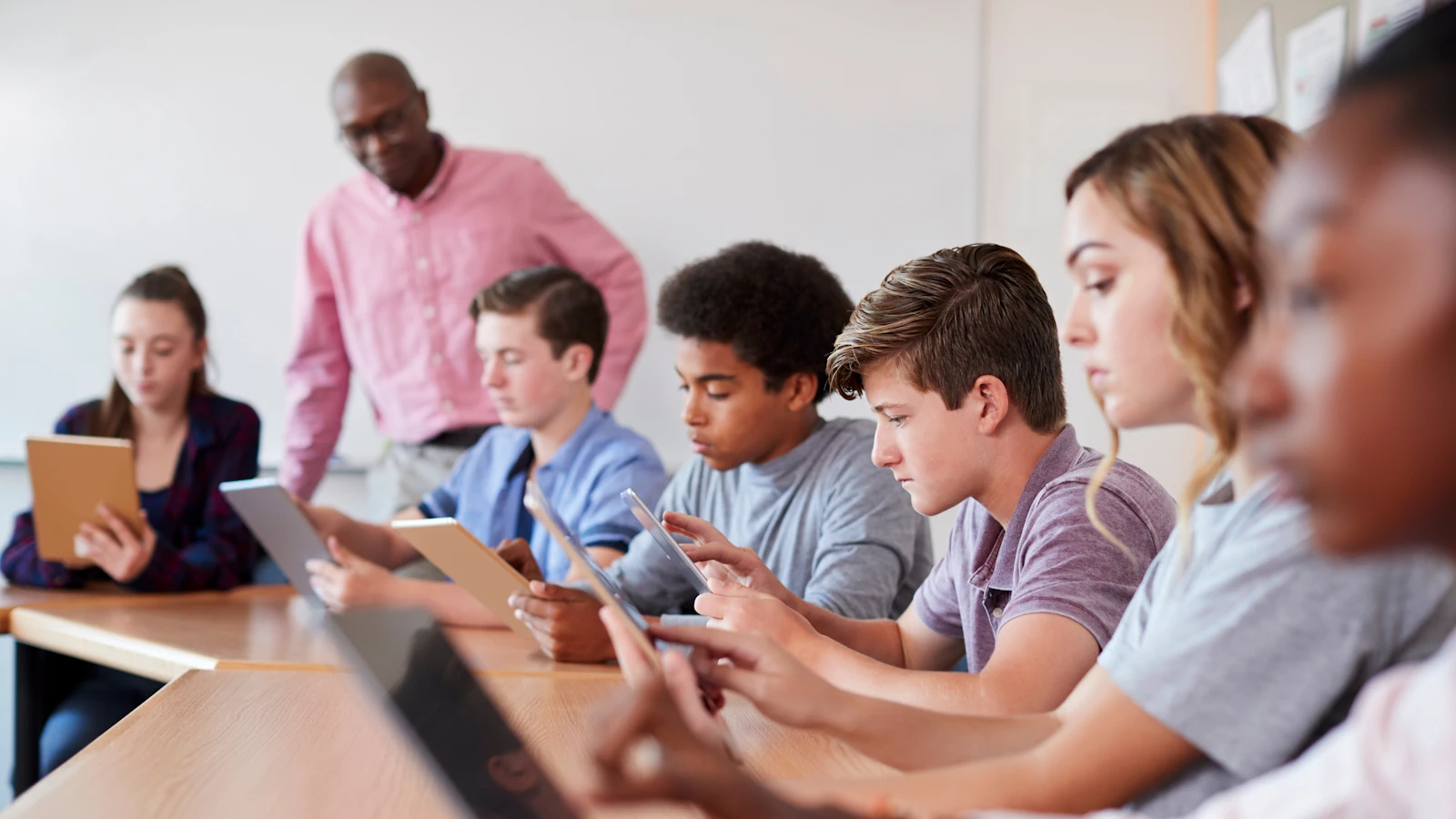
A 2022 review in the Journal of Special Education Technology examined 25 studies of VR interventions for students with disabilities in K–12 settings. Most of them used non-immersive, screen-based simulations. The authors called for more research on semi-immersive and fully immersive VR before strong claims are made about it.
In other words, much of what is described as “VR in special education” was tested on ordinary screens. Results from those studies should not be assumed to carry over to headsets.
Autistic students and social skills
- Encouraging, with wide uncertainty. A 2024 meta-analysis of randomized controlled trials looked at immersive VR training for autistic children and adolescents. Six trials met its criteria and four were pooled. Results favored VR for social and emotional skills, but the confidence interval for social skills ran from almost no effect to a very large one.
- Too little to compare approaches. A 2026 network meta-analysis in JMIR Pediatrics and Parenting covered 11 randomized trials with 718 children and eight different VR technologies. The authors described the evidence network as extremely sparse, with most interventions tested in a single study, and found overwhelming variation between results.
A fair reading is that VR practice may help some autistic students with specific social and emotional skills, that nobody yet knows which approach works best, and that it has been studied as an addition to other support.
Comfort and acceptance
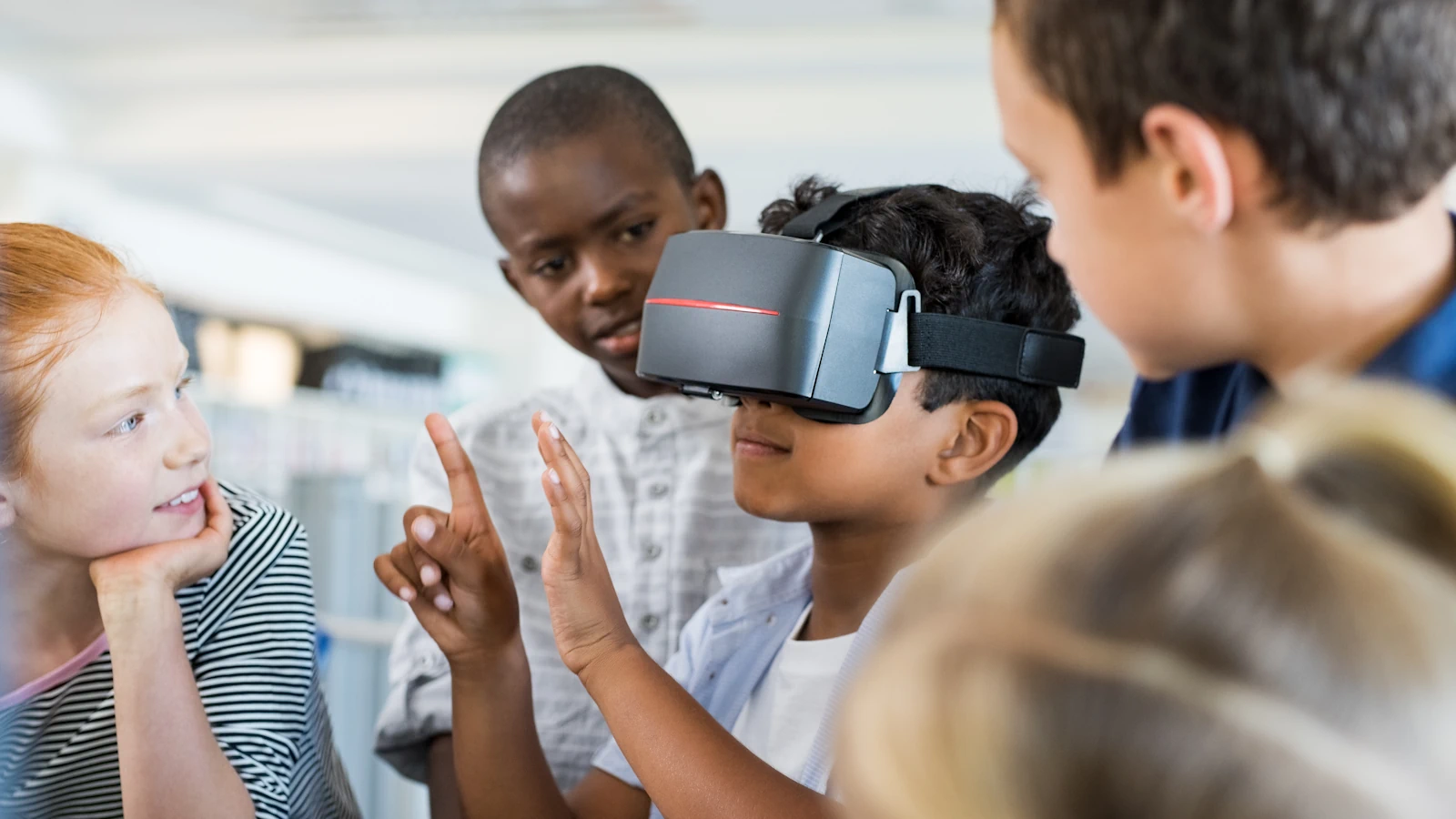
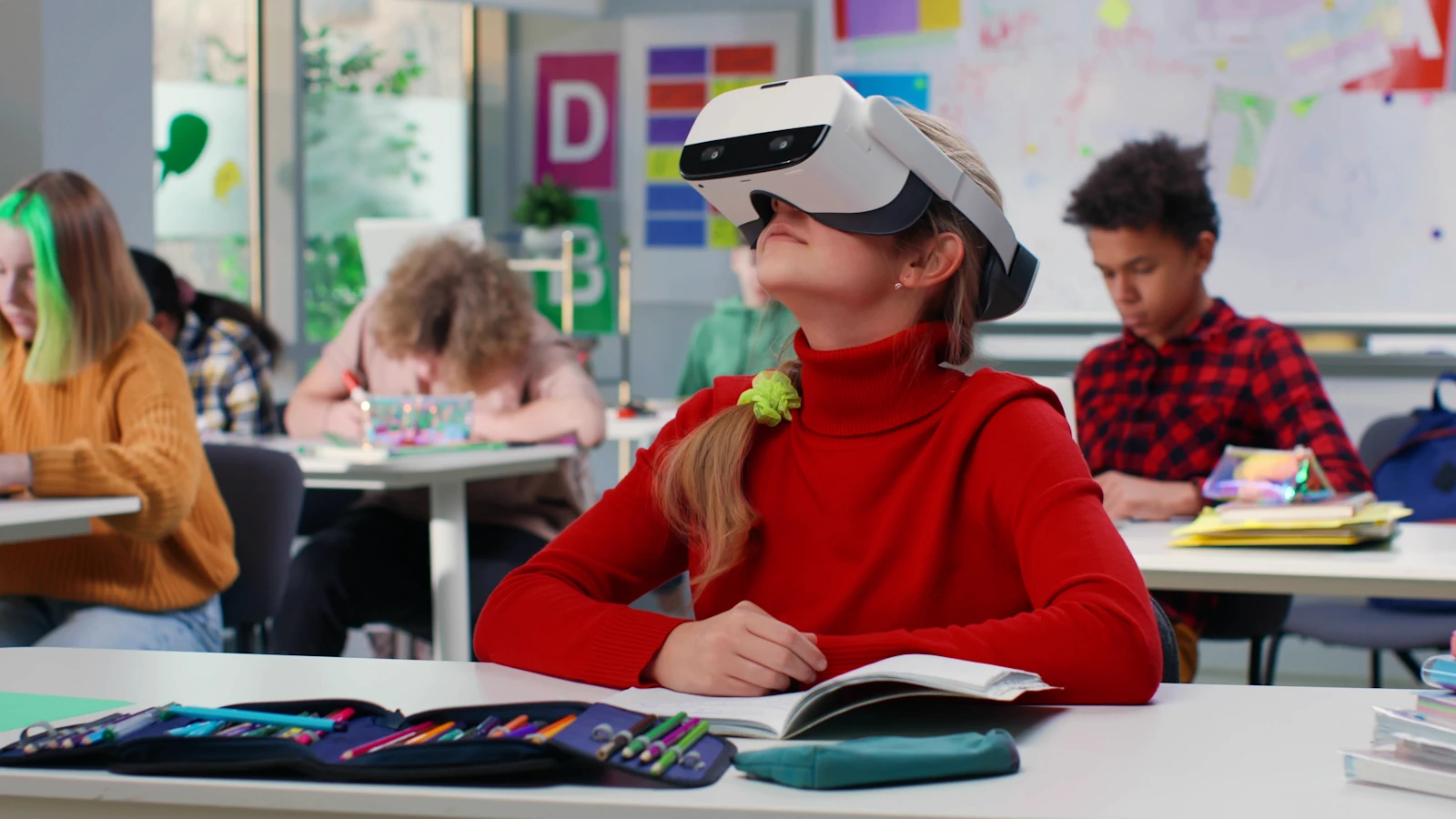
Whether a student is willing and comfortable wearing a headset comes before any question of benefit. A 2016 pilot study in the Journal of Autism and Developmental Disorders explored willingness, acceptance, sense of presence and immersion among autistic participants using a VR headset. A later study that asked autistic children for their own views on headsets in classrooms found they preferred the more costly and technologically advanced devices.
- Introduce it gradually. Let the student see and handle the headset first, and keep early sessions brief.
- Keep it optional. A student who dislikes the headset should have another way to do the activity.
- Follow age limits. Device makers’ minimum ages apply to every student. See getting started with VR and AR in the classroom.
Questions to ask
- Was this program tested with students like ours, and in headsets or on screens?
- How will we tell whether a skill practiced in VR shows up in real situations?
- Have the student and their family been asked whether they want to try it?
Common questions
Does VR help autistic children with social skills?
Early randomized trials favor immersive VR for social and emotional skills, but they are few and small. A 2026 analysis of 11 trials found the evidence too sparse and inconsistent to say which kind of VR works best.
Is VR widely used in special education?
A review of 25 studies with students with disabilities in K–12 settings found that most used non-immersive, screen-based simulations instead of headsets.
Will autistic students accept wearing a VR headset?
It varies by student. Studies have examined willingness and acceptance among autistic participants, and one that asked autistic children for their views found they preferred more advanced headsets. Use should always be optional.
Sources
- Carreon A, Smith SJ, Mosher M, Rao K, Rowland A. A Review of Virtual Reality Intervention Research for Students With Disabilities in K–12 Settings. Journal of Special Education Technology, 2022.
- ASHA Evidence Maps. Effect of Immersive Virtual Reality-Based Training on Cognitive, Social, and Emotional Skills in Children and Adolescents With Autism Spectrum Disorder: A Meta-Analysis of Randomized Controlled Trials (summary of Mittal et al., 2024).
- Wang L, et al. Effectiveness of Different Virtual Reality Technologies for Social and Communication Skills in Children With Autism Spectrum Disorder: Systematic Review and Network Meta-Analysis. JMIR Pediatrics and Parenting, 2026.
- Newbutt N, et al. Brief report: A pilot study of the use of a virtual reality headset in autism populations. Journal of Autism and Developmental Disorders, 2016.
- Newbutt N, Bradley R, Conley I. Using virtual reality head-mounted displays with autistic children: Views, experiences and future directions.